
Menopause weight gain comes from changing physiology rather than a lack of willpower. Falling estrogen moves fat storage toward the belly, muscle loss speeds up, insulin sensitivity drops, and broken sleep raises hunger. GLP-1 medications like semaglutide and tirzepatide work well in menopause, with 15-22% average weight loss in the major trials, but muscle and bone protection matter more at this stage: resistance training, higher protein, and DEXA monitoring belong in the plan. Hormone therapy is not a weight-loss drug, but it can treat the sleep loss and hot flashes that sabotage every weight effort, so it deserves its own evaluation alongside.
Yes, GLP-1 medications work during and after menopause, and no, the weight you have gained since your mid-40s is not a character flaw. The same eating and the same walking routine that held your weight steady at 40 stopped working because your physiology changed underneath you. That is the short answer. The longer answer, the one that decides whether a GLP-1 helps you or costs you muscle and bone before you notice, is what this page is for.
In my practice, I meet this patient almost every week. She is 52, she lives in Fishtown or Fairmount, she eats more carefully than most people I know, and she has gained 15 pounds around her middle in 3 years. Somewhere along the way a clinician told her to eat less and move more, in a tone that suggested she had not thought of that. She had, and it stopped working anyway, and nobody explained why.
Why does weight gain change at menopause?
The terrain changed underneath you. 4 things happen at once during the menopausal transition, and each one makes the old approach less effective:
Fat storage moves to the belly. Before menopause, estrogen directs fat toward the hips and thighs, where it is stored under the skin and is metabolically fairly quiet. As estrogen falls, that signal disappears, and fat storage moves toward the abdomen, including the visceral fat that wraps around your organs. This is why women often gain inches at the waist even when the number on the scale barely moves. Visceral fat is the fraction that drives insulin resistance, inflammation, and cardiovascular risk, which is why it matters more than the number on the scale.
Muscle loss speeds up. Everyone loses muscle with age, but the loss accelerates around menopause because estrogen supports muscle maintenance and repair. Less muscle means a lower resting metabolic rate, so the same plate of food now runs a small daily surplus. It also means weaker bones, since muscle pulling on bone is one of the main signals that tells bone to stay dense.
Insulin sensitivity worsens. Estrogen helps your cells respond to insulin. As it declines, the same bowl of pasta produces a bigger insulin response, and a body swimming in insulin is a body in storage mode. Many of my patients see this on their labs as a creeping fasting glucose or a rising HbA1c years before anyone says the word prediabetes.
Sleep falls apart, and hunger follows. Night sweats, 3 AM waking, and the loss of progesterone's calming effect fragment sleep through the transition. Short, broken sleep raises hunger hormones and cravings the very next day. A woman who slept 5 broken hours is fighting her own appetite chemistry before breakfast, and no meal plan survives that for long.
Put those together and "eat less, move more" fails for a physiological reason. The advice was built for a body that no longer exists.
Do GLP-1 medications work during and after menopause?
Yes, semaglutide (Wegovy, Ozempic) and tirzepatide (Zepbound, Mounjaro) work in menopausal women the same way they work in everyone else: they quiet appetite signals, slow stomach emptying, and improve insulin sensitivity. In the major trials, which included large numbers of midlife and older women, average weight loss ran 15-22% over 12-18 months at full doses. The SELECT trial went further and showed a 20% reduction in heart attacks, strokes, and cardiovascular death in over 17,000 people with established heart disease. Cardiovascular risk climbs after menopause, so that result speaks directly to the women in this conversation.
So the medications are not the controversy. For the right patient, they are the most effective non-surgical tool we have, and they directly target the insulin resistance and visceral fat that menopause created. I have watched patients who spent a decade blaming themselves lose the weight, watch their blood pressure and ApoB improve, and grieve a little for all the years they were told to try harder.
GLP-1s work; that part is settled. The harder part of this conversation is what they cost if you use them carelessly at this stage of life, and that cost is paid in muscle and bone.
Why does muscle matter more on a GLP-1 after menopause?
Because you are already losing it faster than you were at 35, and a GLP-1 used carelessly speeds that up. When these medications quiet your appetite, they do not tell your body to burn only fat. A meaningful share of rapid weight loss can come from lean mass, and in a 55-year-old woman that lean mass is harder to rebuild than it was 20 years earlier. Losing 30 pounds where a big share is muscle leaves you smaller, weaker, more insulin resistant per pound, and closer to frailty. That is not a health win so much as aging on fast-forward.
2 things protect you, and in my practice they are conditions of the prescription, not suggestions:
Resistance training, 2-3 days per week. Lifting is the signal that tells your body to keep the muscle while the fat comes off. Walking is wonderful and I want you doing it, but walking alone does not send that signal. If you have never lifted, this is the decade to start, and a few sessions with a good trainer in the neighborhood is a better investment than almost any supplement.
Protein at every meal. The range most commonly cited for preserving muscle during weight loss is roughly 1.6-2.2 grams of protein per kilogram of body weight per day, which for many women works out to somewhere around 100-130 grams daily. The number matters less than the habit: protein at every meal, starting with breakfast, on a medication that makes you forget to eat. Appetite suppression plus low protein is the recipe for muscle loss, so we build the protein plan before the first injection.
What about bone density during weight loss in menopause?
This is the piece almost nobody mentions, and it is why I think this conversation belongs with a physician rather than a weight-loss subscription. The years around menopause are already the fastest bone-losing years of a woman's life; without intervention, many women lose 10-20% of their bone density in that window. Significant weight loss, by any method, tends to accelerate bone loss on top of that, partly because a lighter body loads the skeleton less and partly because the hormonal signals of an energy deficit are not kind to bone.
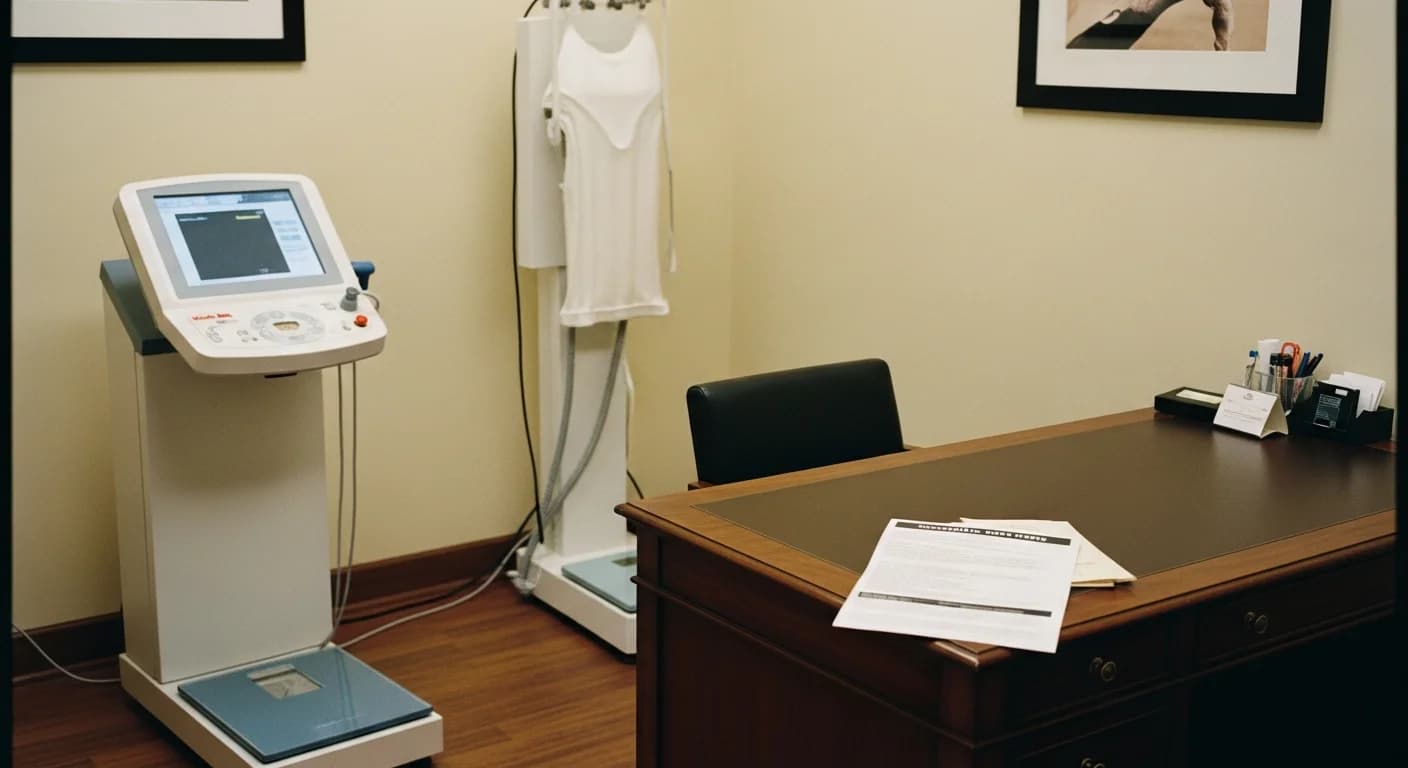
So in my practice, a woman in or past the menopausal transition who is considering a GLP-1 gets a DEXA scan as part of the workup. A single scan gives us 2 things: a bone density baseline before the weight loss starts, and a body composition readout that tells us how much of her weight is lean mass and how much is visceral fat. Then we repeat it during treatment, so if the weight is coming off but the muscle or bone is going with it, we see it in the data and adjust, rather than discovering it as a fracture at 68. The same tools that protect muscle protect bone: resistance training, adequate protein, vitamin D and calcium sufficiency, and, for many women, the hormone conversation below.
Is HRT part of the weight answer?
Here is the plain version, because you deserve it stated clearly: hormone replacement therapy is not a weight-loss drug. Estradiol will not do what semaglutide does, and any clinic selling HRT as the fix for menopause weight gain is overselling it. The evidence says hormone therapy does not cause weight gain, may modestly favor a healthier fat distribution, and can support the conditions under which weight management becomes possible again. That last part is where it earns its seat at this table.
Think about what sabotages a weight effort in menopause: night sweats that wreck sleep, 3 AM waking, the anxiety and low mood of the transition, joint pain that makes training miserable. Transdermal estradiol and micronized progesterone treat the night sweats and sleep disruption directly in appropriate candidates, and for some women they also ease the mood changes and joint pain of the transition. A woman who sleeps 7 hours, wakes without soaked sheets, and can train without her shoulder screaming is in a far better position to lose weight than the same woman untreated, whether or not a GLP-1 is involved.
So at Fishtown Medicine the 2 questions get evaluated side by side, each on its own merits. Some of my patients need both, and some need only one. The point is that "should I be on hormones?" and "should I be on a GLP-1?" are separate medical questions with separate risk conversations, and a midlife weight visit that skips the hormone evaluation is an incomplete visit. If you are still cycling and not sure where you are in the transition, start with our perimenopause guide.
Who is a good candidate for a GLP-1 in menopause, and who is not?
A good candidate usually looks like this: meaningful weight to lose, evidence of metabolic trouble (rising HbA1c, insulin resistance, high visceral fat on DEXA, fatty liver, or established cardiovascular risk), and a willingness to do the muscle and protein work that makes the weight loss healthy. The medication makes the weight loss possible, but the training and protein decide whether it makes you healthier.
I counsel against, or decline, a GLP-1 in a few situations:
- A personal or family history of medullary thyroid cancer or MEN2, or a history of pancreatitis. These are standing contraindications and cautions for the whole class.
- Pregnancy, or actively trying to conceive. Perimenopause is not menopause, and pregnancy remains possible until 12 months without a period.
- An active or recent eating disorder. An appetite-erasing drug in that setting can do serious harm.
- A small amount of weight and a lot of frailty risk. For a thin-framed woman with osteopenia and 10 vanity pounds, the muscle and bone cost likely outweighs the benefit. The better prescription is usually lifting, protein, sleep, and often hormones.
- Anyone unwilling to be monitored. These medications deserve baseline labs, a DEXA, dose titration, and follow-up from a physician who adjusts the plan as your body responds.
If you are unsure which group you are in, that is what a first conversation is for.
Key Takeaways
- The terrain changed underneath you. Estrogen decline moves fat to the belly, speeds muscle loss, worsens insulin sensitivity, and breaks sleep. "Eat less, move more" fails for physiological reasons.
- GLP-1s work in menopause. Semaglutide and tirzepatide produced 15-22% average weight loss in trials and improve the cardiometabolic risks that rise after estrogen falls.
- Muscle and bone are the stakes. Resistance training 2-3 days per week, protein in the 1.6-2.2 g/kg range, and DEXA monitoring turn a weight-loss drug into a healthspan tool instead of accelerated aging.
- HRT is not a weight-loss drug. It earns its place by treating the night sweats and broken sleep that sabotage every weight effort, and it may ease the joint pain that makes training miserable.
- Candidacy is a medical question. Metabolic disease and meaningful weight to lose argue for it; thyroid cancer history, pregnancy potential without contraception, eating disorders, and frailty argue against.
Related Services and Reading
- Menopause Care in Philadelphia - the 30-year plan for the years after your last period
- GLP-1 Weight Loss in Philadelphia - how Fishtown Medicine prescribes and monitors these medications
- Perimenopause: The Window of Opportunity - if you are still cycling and the symptoms started early
- The Metabolic Reset: GLP-1s Beyond Weight Loss - what these medications do for the heart, brain, and inflammation
- DEXA Scan in Philadelphia - the bone density and body composition baseline this plan is built on
- Testosterone for Women - what the evidence supports, and why it is not a weight-loss drug

Fishtown Medicine | Hormones
Frequently Asked Questions
Common Questions
Deep-Dive Questions
Ready when you are
The chat is our AI assistant, answering from our published guides. To talk it through with Dr. Ash himself, start with the intake.